





Little Minds In Motion
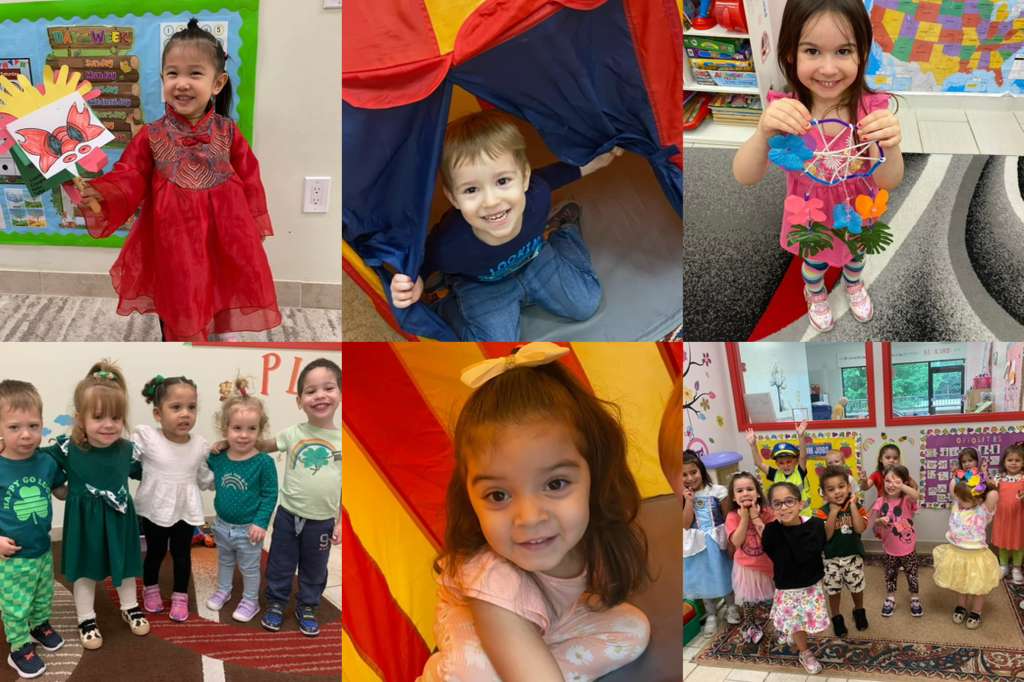
This program is designed for toddlers who learn best through hands-on experiences and play. Our experienced educators build strong, nurturing relationships with each child and guide them through sensory-based learning activities that inspire curiosity, exploration, and early development.
COGNITIVE DEVELOPMENT:
Our program maximizes daily learning opportunities to promote the development of both language and motor skills through meaningful, connected experiences. Through purposeful play, guided activities, and everyday interactions, educators support toddlers as they explore, communicate, and build confidence to express themselves through words, gestures, and movement while strengthening both fine and gross motor skills. By integrating language development with physical exploration, we create a rich learning environment that support curiosity, independence, and overall early childhood development.
Focus Areas:
Matching objects one-to-one
Identifying basic patterns
Learning through observation and exploration
Identifying similarities and differences
Understanding the order of events
Applying early problem-solving strategies
LANGUAGE DEVELOPMENT
Our program supports toddlers as they progress from nonverbal forms of expressions to emerging verbal communication. Through consistent conversation modeling, educators encourage children to use sounds, gestures and words to express their needs, ideas, and emotions, As language skills develop, toddlers are guided and supported n engaging in meaningful verbal interactions with both their teachers and peers, fostering confidence, social connection and early communication skills.
Focus Areas:
Forming basic sentences
Responding to simple questions
Labeling and recognizing objects
Shows appropriate book-handling behaviors
Carrying our two step directions
Broadening word use in everyday conversations
SOCIAL EMOTIONAL GROWTH
Our teachers support children in developing independence while learning to recognize and manage their emotions during interactions with others. Through guided experiences and supportive relationships, children are encouraged to build confidence and develop positive social skills. They participate in activities designed to nurture an understanding of trust, empathy, and compassion, helping them form meaningful connections with their teachers and peers.
Focus Areas:
Developing trusting relationships
Enhancing self-regulation of emotions
Communicating likes and dislikes
Practicing kindness and consideration
Developing awareness of self and feelings
GROSS & FINE MOTOR SKILLS
The cultivation of coordination and balance constitutes a critical component of early childhood development. Progressive refinement of fine and gross motor skills enables children to achieve greater autonomy and enhances their self-confidence. Educators systematically implement structured activities that stimulates both large and small muscle groups, thereby promoting comprehensive motor development, physical competence, and overall functional independence.
Focus Areas:
Enhancing fine motor control
Exploring and experimenting with writing tools and materials
Building endurance for sustained periods of focused play
Engaging in challenging balance activities and intricate movements
Exhibiting hand-eye coordination skills
LEARNING THROUGH MUSIC
Research indicates that music supports cognitive development, enhances learning abilities, strengthens communication, and improves memory. Our age-appropriate curriculum fosters language development through carefully selected songs and musical activities, delivered via our proprietary Learning Through Music program, designed to engage children in meaningful, developmentally appropriate auditory and linguistic experiences.
Focus Areas:
Memorizing and singing songs
Engaging with musical instruments
Exploring sounds and rhythmic patterns
Taking part in movement and dance